

Celebrating Witchcraft & Pagan Events in Australia & Beyond
The celebration of the changing seasons is an important part of many pagan and earth-based spiritual traditions. In the Northern Hemisphere, the sabbats, or seasonal holidays, are typically celebrated around the solstices, equinoxes, and cross-quarter days. However, in the Southern Hemisphere, the seasons are reversed, which means that the sabbats fall on different dates. Understanding the significance and timing of these holidays is essential for those living in the Southern Hemisphere, such as witches living in Australia, who wish to connect with nature and honour the cycles of the Earth. In this blog article, we will explore the sabbat dates in the Southern Hemisphere and discuss the meaning and symbolism behind each of these sacred celebrations. The table below outlines the Sabbats and their traditional dates, as well as the accurate times & dates in 2026 in AEST, according to astronomical and pagan sources.
| Sabbats | Traditional Date | Time and Date 2026 |
| Lammas | February 1 | February 4, 2026 5:45am |
| Mabon (Autumnal Equinox) | March 21 | March 22, 2026 12:46am |
| Samhain | April 30-May 1 | May 5, 2026 9:37pm |
| Yule (Winter Solstice) | June 21 | June 21, 2026 6:24pm |
| Imbolc | August 1 | August 7, 2026 9:41pm |
| Ostara (Spring Equinox) | September 21 | September 23, 2026 10:05am |
| Beltane | October 31 | November 7, 2026 7:37pm |
| Litha (Summer Solstice) | December 21 | December 21, 2026 (approx) |
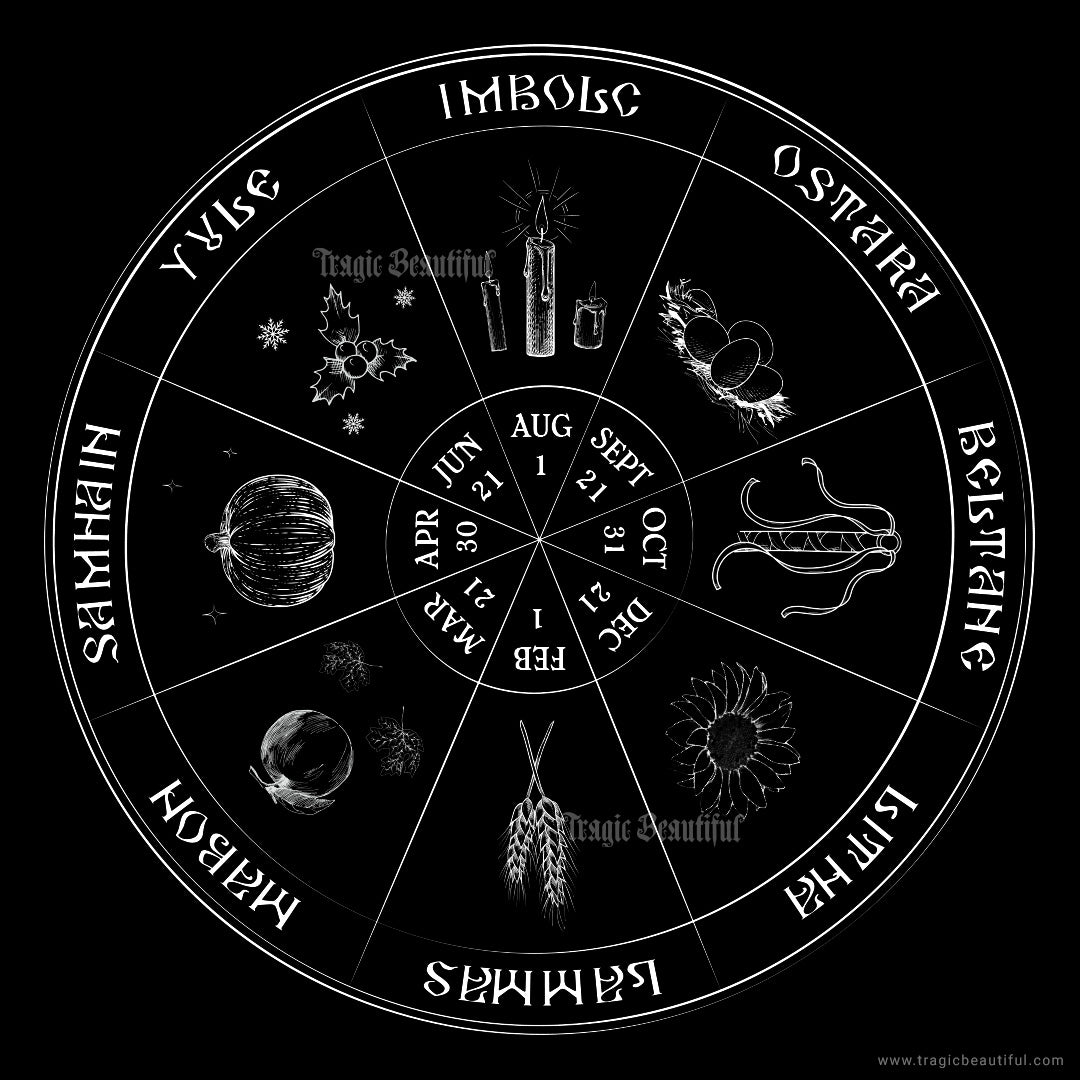
The Wheel of the Year
The Wheel of the Year in the Southern Hemisphere is a celebration of the changing seasons that reflects the natural rhythms of the local environment. Each of the eight sabbats in the cycle has its own spiritual significance and symbolism, from the renewal and rebirth of spring to the rest and reflection of winter. By following the Wheel of the Year Southern Hemisphere 2026, practitioners can deepen their connection to the earth and the cycles of life and death.
The Sabbats in Australia
Yule
Southern Hemisphere Date: June 21
Northern Hemisphere Date: December 21
Also Known as: Midwinter, Winter Festival, and Alban Arthan
Celebrated as: the rebirth of the sun, bringing hope for the coming spring and symbolising renewal and the return of the light.
Yule is celebrated as the winter solstice and marks the longest night of the year in the Northern Hemisphere but the depth of winter in the Southern Hemisphere. It is a time of rebirth and renewal as the sun begins its return toward longer days, bringing hope for spring. Traditionally, Yule involved feasting, candle lighting, and fire rituals to honour community and light in darkness. Today it remains a festival of reflection, warmth, and hope.
Imbolc
Southern Hemisphere Date: August 7
Northern Hemisphere Date: February 3
Also Known as: Brigid's Day, Candlemas, and Oimelc
Celebrated as: a time of new beginnings and the awakening of the natural world after the dark winter months.
Imbolc marks the midpoint between winter and spring. It is associated with the first signs of life stirring in the earth and with intentions for the coming fertile season. Lighting candles, planting seeds, and setting new-year intentions are all traditional practices, focusing on inner and outer growth.
Ostara
Southern Hemisphere Date: September 23
Northern Hemisphere Date: March 20
Also Known as: Eostre, Alban Eilir, Vernal Equinox, Lady Day, and the Festival of Trees
Celebrated as: a time of renewal, growth, and the return of life to the earth after winter.
Ostara celebrates balance between light and dark as day and night are roughly equal. It’s a season of renewed energy, planting, and embracing growth. Rituals often involve eggs, flowers, and feasts, symbolising fertility and the blossoming earth.
Beltane
Southern Hemisphere Date: November 7
Northern Hemisphere Date: May 4–5
Also Known As: May Day, Walpurgis Night, and the Festival of Flora
Celebrated as: a time to celebrate fertility, growth, and abundance, and to honour the sacred union between the god and the goddess.
Beltane heralds the arrival of summer and embodies passion, fertility, and creativity. Traditionally marked by dancing, maypoles, and outdoor gatherings, it’s a celebration of life’s abundance and vitality.
Litha (Summer Solstice)
Southern Hemisphere Date: December 21
Northern Hemisphere Date: June 20–21
Also Known As: Midsummer, St. John's Day, and Alban Hefin
Celebrated as: a time of abundance, growth, and the peak of the solar year.
Litha marks the longest day of the year and is traditionally celebrated with bonfires, outdoor gatherings, and rituals honouring the sun’s life-giving energy. It’s a feast of light, vitality, and connection with nature at its most abundant.
Lammas
Southern Hemisphere Date: February 4
Northern Hemisphere Date: August 6–7
Also Known As: Lughnasadh, August Eve, and the Feast of Bread
Celebrated as: a time of the first harvest, when grains and fruits begin to ripen and are gathered.
Lammas recognises the first harvest of the growing year. Traditionally, people gave thanks for the earth’s bounty, baked bread from newly harvested grain, and shared feasts with community. Today Lammas remains a festival of gratitude, sharing, and celebration of abundance.
Mabon (Autumn Equinox)
Southern Hemisphere Date: March 22
Northern Hemisphere Date: September 22–23
Also Known As: Fall Equinox, Harvest Home, and the Feast of Avalon
Celebrated as: a time to give thanks for the bounty of the earth and to prepare for the coming winter.
Mabon marks the second harvest and balance of light and dark. It’s a season to give thanks, reflect on cycles of life, and celebrate abundance with feasting, storytelling, and community rituals.
Samhain
Southern Hemisphere Date: May 5
Northern Hemisphere Date: November 6–7
Also Known As: Halloween, All Hallows' Eve, and the Day of the Dead
Celebrated as: a time to honour ancestors, reflect on life and death, and mark the onset of winter.
Samhain is the festival that closes the seasonal cycle, honouring the ancestors and embracing the thinning of the veil between worlds. Rituals often involve remembrance, divination, and candle lighting to connect with loved ones who have passed.
Wheel Of The Year Altar Cloths

If you're feeling overwhelmed by all these different dates and celebrations to keep up with - we get it! We're a gaggle of busy witches here at Tragic, and that's why we have created two different Southern Hemisphere Wheel Of The Year Altar Cloths in both floral and black. These altar cloths were designed to help you keep the Sabbat dates top of mind in a practical, yet whimsical way.
Check out the rest of our Altar Cloths here.